Wait, Is That Character Actually Me? The Strange Gift of Seeing Yourself in Fiction
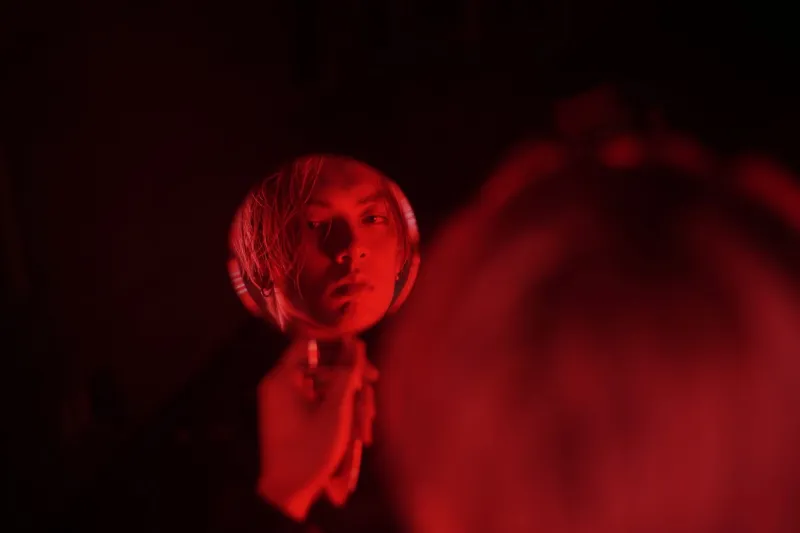
Somewhere between your third rewatch and your seventh fanfic deep-dive, it happens. You're completely absorbed in a character — their choices, their contradictions, the specific way they hold themselves together when everything is falling apart — and then a small, inconvenient thought floats up: Oh. That's me, isn't it.
It can feel almost embarrassing at first. Like you've been caught doing something private in public. But here in Toriland, we don't think that moment is something to brush off or feel weird about. We think it might be one of the most quietly powerful things a story can hand you.
The Projection We Don't Notice We're Doing
Psychologists have a name for what happens when we unconsciously assign our own feelings, fears, or desires to an outside source: projection. In clinical contexts it often gets a bad rap — it's the thing therapists gently point out when you're blaming your coworker for the anxiety that's actually yours. But projection isn't always a problem to fix. Sometimes it's a mechanism.
When you pour your own unresolved stuff into a fictional character, you're essentially creating a safe container for emotions that feel too big or too complicated to sit with directly. You can watch that character struggle with self-worth, with belonging, with rage, with grief — and feel all of it at a manageable distance. You're not avoiding the emotion. You're approaching it from a side angle.
Fan culture, at its best, is built on this. The characters we obsess over aren't random. We find them. Or maybe they find us, right when we need them.
When the Mirror Cracks Open
The plot twist — the parasocial one, the personal one — is the moment the distance collapses. You realize you haven't just been enjoying this character's story. You've been using it. Processing something. Working something out.
Maybe you've spent months deeply invested in a character who keeps pushing people away, who self-sabotages every good thing that comes their way, who is fiercely independent to the point of isolation. And one day, mid-scroll through a fan thread, you read someone's character analysis and feel your chest tighten in a very specific, non-fictional way.
That tightening? That's information.
It's not a sign that you've gone too far into fandom, or that you're "too attached." It's a sign that the story did what stories are supposed to do — it reached across the fictional line and touched something real.
Why Fiction Gets Through When Direct Conversation Doesn't
There's a reason therapists sometimes use narrative techniques, or why bibliotherapy — the practice of using books as a therapeutic tool — has been gaining traction in the US mental health community. Fiction creates what researchers call aesthetic distance: enough separation from our own experience that we can examine it without triggering our defenses.
When someone asks you directly, "Do you have trouble letting people in?" your brain might immediately gear up to explain, justify, or deflect. But when you're watching your favorite character build walls in real time, your defenses stay down. You're in observer mode. You feel compassion for them. And sometimes, that compassion quietly extends inward before you even realize it's happening.
Tori would get this. The whole point of building a world — any world — is that it gives you room to explore things you can't always access head-on. Characters are proxies. They carry the weight of things we're not ready to name yet.
The Realization Doesn't Have to Ruin the Fun
Here's where people sometimes get tripped up: they assume that once they see themselves in a character, the magic is gone. Like the spell breaks when you understand the trick. But that's not how it works.
Knowing that you connect with a character because of something personal doesn't make the connection less real. If anything, it deepens it. You're no longer just a fan — you're in an actual dialogue with the story. The character becomes a kind of ongoing reference point. A way to check in with yourself.
"What would she do here?" stops being a fun hypothetical and starts being a genuinely useful question. Not because you should model your life after a fictional person, but because the answer often tells you something about what you actually want to do — or fear doing.
Sitting With the Uncomfortable Part
Sometimes the self-recognition isn't flattering. Sometimes the character you see yourself in is the one who makes the worst choices, who hurts people they love, who is messy in ways you'd rather not claim.
That's harder. But it's also arguably more valuable.
Fiction is one of the few spaces where we can witness a version of our own worst tendencies playing out — and actually feel the consequences, without having to live them. You can watch a character spiral and understand, viscerally, where that road goes. You can feel grief for them that's partially grief for a version of yourself you're quietly trying not to become.
That's not dysfunction. That's emotional intelligence, doing its job in a roundabout way.
What to Actually Do With the Realization
So you've had the moment. You've seen yourself in the mirror that your favorite character was quietly holding up this whole time. Now what?
You don't have to do anything dramatic. You don't have to immediately call your therapist or write a confessional journal entry (though both are valid). Sometimes just naming it is enough. Letting yourself think: "I've been drawn to this character because I recognize something in them. And that something is worth paying attention to."
From there, curiosity is your best tool. Not judgment. Ask yourself what specifically resonates. Is it how they handle conflict? How they relate to love? Their relationship with ambition, or failure, or forgiveness? The more specific you get, the more useful the insight becomes.
And then — here's the part that feels a little uncomfortable but matters — let yourself extend to your real self the same compassion you've been freely giving this character for seasons, or volumes, or however long you've been in their corner.
You've been rooting for them through every bad decision and every slow comeback. You believed in their capacity to change and grow. That belief wasn't misplaced. And it doesn't have to stop at the edge of the fictional world.
The Fan Experience, Upgraded
At the end of the day, this is what makes deep fan engagement genuinely different from passive entertainment consumption. When you're truly in it — when you're building headcanons, reading meta, writing fic, spending time in the universe — you're not just receiving a story. You're in a relationship with it.
And like any real relationship, it will eventually show you something about yourself.
Toriland is built on the idea that the worlds we love aren't separate from us — they're extensions of us. The characters we keep coming back to are holding pieces of our own story, waiting for us to be ready to recognize them.
When you finally do? That's not the end of the fan experience.
That's where it actually begins.