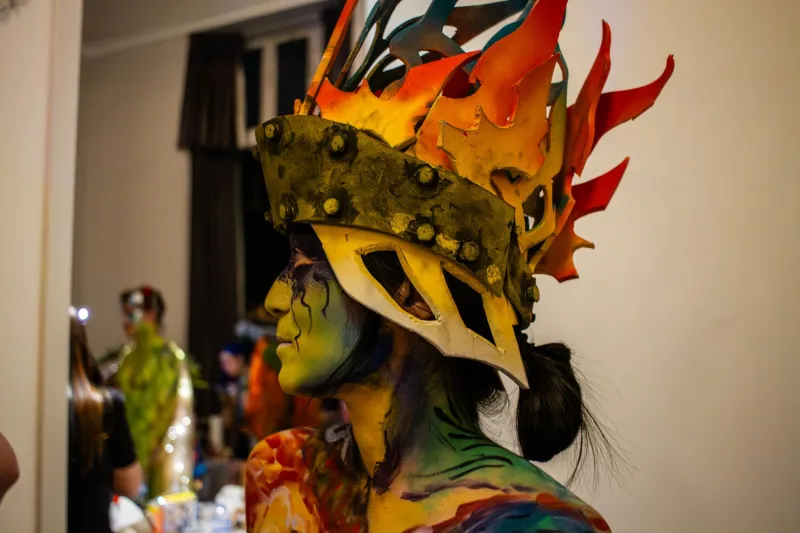
Who Are You Online? The Quiet Power of Building a Self You Actually Choose

The Version of You That Exists Online
Here's a question worth sitting with: when you show up somewhere online — a forum, a fan site, a creative corner of the internet you've carved out for yourself — are you you? Or are you some edited, curated, slightly braver version of yourself?
For a lot of people, the honest answer is: both. And that's not a bug. That might actually be the whole point.
We've spent years treating online personas like a form of deception — something to be suspicious of, a mask people wear to hide bad intentions or deep insecurities. But researchers who study identity and self-expression are increasingly pushing back on that framing. The alter ego, the fan persona, the character you slip into when you log onto a space that feels like yours — these aren't lies. For many people, they're the most truthful experiments they've ever run on themselves.
The Psychology Has a Name (Several, Actually)
Dr. Sherry Turkle, a clinical psychologist and MIT professor who has spent decades studying humans and technology, described online spaces as "identity workshops" back in the 1990s — and honestly, the phrase has only gotten more accurate with time. The idea is that low-stakes digital environments give people permission to try on versions of themselves without the social cost of doing it in real life.
Think about what that means practically. If you've always felt shy but suspect there's a more confident version of you somewhere underneath the surface, a fan site — a place where you're known by a screen name, where the community is built around shared love rather than professional performance — might be the first place you let that version breathe.
Psychologists also point to something called "self-expansion theory," which suggests that humans are hardwired to grow through connection and new experiences. When we adopt a persona or build an immersive creative space online, we're not running away from ourselves. We're expanding the map of who we could be.
Fan Sites as Identity Labs
This is where places like Toriland come in — and why the fan site format matters in ways that go deeper than nostalgia.
Personal fan sites aren't just archives or tribute pages. At their best, they're full ecosystems: a character or persona at the center, a community orbiting around shared investment in that world, and a creator (or team of creators) who gets to shape the whole thing. That creative control is rarer than it sounds.
On mainstream social platforms, your identity is shaped by metrics. You post something, the algorithm decides how many people see it, and the engagement numbers quietly tell you whether the version of yourself you just shared was "worth it." Over time, that feedback loop does something to people. It flattens them. It rewards performance over authenticity and punishes anything too niche, too weird, or too genuinely personal.
Fan sites operate differently. They're built around a specific creative vision — a character, a universe, a vibe — and the people who show up are there because they already opted in. There's no algorithm deciding your value. There's just the world you built and the people who wanted to live in it for a while.
Longtime fan site creators will tell you that the act of building these spaces changes them. You make decisions about who your character is, what your world values, what kind of community you want to foster — and somewhere in all of that, you figure out things about yourself that regular life never quite forced you to examine.
Escapism vs. Self-Discovery: A False Choice
One of the most persistent misconceptions about online personas and fan spaces is that they're purely escapist — a way to avoid reality rather than engage with it. But that framing sets up a false binary.
Escapism and self-discovery aren't opposites. Sometimes you have to leave the pressure of your actual life before you can hear yourself think clearly enough to figure out who you are.
Consider the teenager in a small town who doesn't have language yet for what they're feeling — about their identity, their interests, their sense of self. They find a fan site, start participating in a creative community, maybe even build their own corner of it. They're "escaping," sure. But they're also practicing. Practicing being seen. Practicing having opinions. Practicing building something and putting it in front of other people.
That's not nothing. That's actually a lot.
The Surveillance Problem (and Why It Matters)
Here's what makes this conversation feel more urgent right now: we are living through a period of unprecedented digital surveillance. Every click is tracked, every search is logged, every post is fed into a system designed to predict and monetize your behavior. The internet, which once felt like a wild and genuinely open frontier, increasingly feels like a place where you are always being watched and evaluated.
In that environment, spaces that offer genuine anonymity or creative freedom aren't just fun — they're almost countercultural. A personal fan site where you can be "Starfall_Tori" or whoever your version of yourself happens to be in that universe is a small but meaningful act of reclaiming your own narrative.
You're not a data point there. You're a person with a persona, a backstory, a community. The distinction matters more than it might seem.
So Who Are You, Really?
The most interesting thing about the research on online identity isn't that people use digital spaces to pretend to be someone else. It's that they often use those spaces to become more themselves — to access parts of their personality that the demands of daily life keep suppressed.
The loudmouth who's quiet at work. The deeply empathetic person who keeps it together in every crisis but falls apart in fan fiction comment sections over fictional character deaths. The creative who can't find an outlet in their nine-to-five but has built an entire world online that thousands of people visit every week.
These aren't fake versions of people. They might be the realest ones.
At Toriland, we think about this a lot — because this whole place is built on the premise that a character, a persona, a world you love can be a mirror as much as an escape. Tori isn't just a character. She's an invitation to show up somewhere and feel like you belong.
And maybe, in the process, figure out a little more about who you are when nobody's grading you for it.